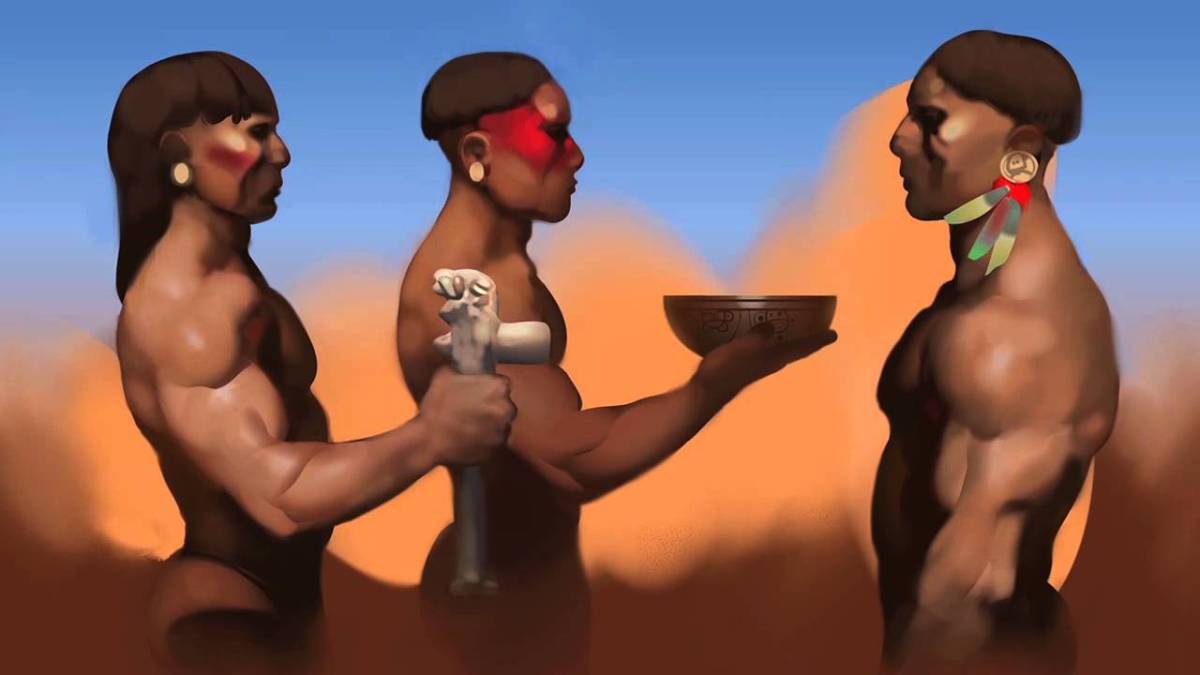
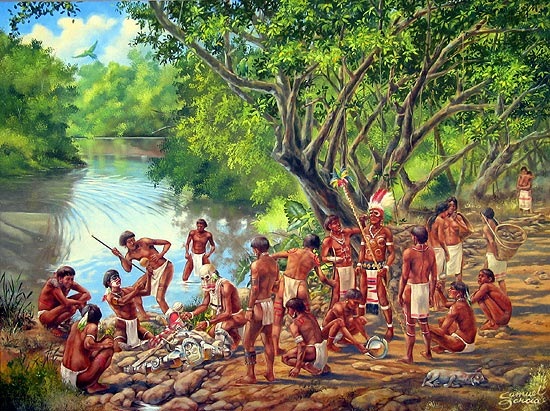
Taino - Concilio Taino Guatu Ma Cu A Boriken : In fact if you google taíno, google says we are extinct.. Ancient inhabitants of the region, the taino indians left behind narratives and tales in the form of these symbols. They lived in huts made of woven cane, round ones (bohios) for the general population, square ones (caneyes) for the caciques. When columbus arrived in the late fifteenth century, the taino had settlements in the bahamas as well as the islands of. The taino mainly lived off of what they could find on land and were also fishermen. Craft barbecue and wood fire cooking is the main focus.
The outdoor patio area can accommodate 400+ people, and features a 20 foot brownstone wood fired grill. For over a thousand years the population increased and more islands where inhabited. Taino the taino indians were an ancient civilization originating from what is now puerto rico. The taino people originated in venezuela and spread throughout the caribbean. A member of an arawak people of the greater antilles and the bahamas whose culture was destroyed by genocide, epidemics, and assimilation under spanish colonization in the early 1500s.
This Is Not Taino from 64.media.tumblr.com The taíno were an indigenous people of the caribbean. Taíno is an extinct arawakan language that was spoken by the taíno people of the caribbean. The taínos were present throughout the caribbean islands from approximately 1200 to 1500 a.d., and when christopher columbus arrived in the region, the taínos were the indigenous group he encountered. History and etymology for taino. However, the origin of the taino indians is not known for sure. The exhibition explores how in the last forty years, people have begun reclaiming our indigenous heritage. Taíno is an arawakan language spoken by the taíno, ciboney, lucayan, and yamaye peoples of what is now puerto rico, cuba, the dominican republic, jamaica, and across the caribbean. The museum will be full equipped to sustain kids curiosity.
The taínos were an indigenous people that lived in the americas before columbus arrived there.
Cristóforo colombo wrote in his journal that taínos had beautiful, tall, slender bodies. The taino did not wear clothing, except for a small apron worn by married women; The taíno were an indigenous people of the caribbean. When columbus arrived in the late fifteenth century, the taino had settlements in the bahamas as well as the islands of. The popular narrative is that we are extinct like neanderthals. At the time of european contact in the late fifteenth century, they were the principal inhabitants of most of cuba, hispaniola, jamaica, puerto rico, the bahamas, and the northern lesser antilles. The museum works to support the continuance of culture, traditional values, and transitions in contemporary native life. They were one of the arawak peoples of south america, and the taíno language was a member of the arawakan language family of northern south america. The taínos were farmers and fishermen. Taíno is an arawakan language spoken by the taíno, ciboney, lucayan, and yamaye peoples of what is now puerto rico, cuba, the dominican republic, jamaica, and across the caribbean. History and etymology for taino. They came from the caribbean coast of south america. 2,526 likes · 354 talking about this · 332 were here.
The exhibition explores how in the last forty years, people have begun reclaiming our indigenous heritage. Other europeans arriving in south america called the same culture of people arawak from the word for cassava flour, a staple of the race. Taíno is an arawakan language spoken by the taíno, ciboney, lucayan, and yamaye peoples of what is now puerto rico, cuba, the dominican republic, jamaica, and across the caribbean. They moved north to the many scattered islands know today as the caribbean. Nmai is committed to advancing knowledge and understanding of the native cultures of the western hemisphere through partnership with native people and others.
Remembering The Taino Language Legacy In Cuba Cuba 50 from cubacultblog.files.wordpress.com Other europeans arriving in south america called the same culture of people arawak from the word for cassava flour, a staple of the race. According to archaeologist laura del olmo frese, while the taínos had their similarities, they also had their differences in art and governance. The outdoor patio area can accommodate 400+ people, and features a 20 foot brownstone wood fired grill. (member of an extinct caribbean indigenous people) a. They came from the caribbean coast of south america. Los taínos fueron los primeros habitantes de américa con que se encontró cristóbal colón.the tainos were the first inhabitants of the americas that christopher colombus encountered. The taíno were an arawak people who were the indigenous people of the caribbean and florida. The taínos were farmers and fishers, and practiced intensive root crop cultivation in conucos, or small raised plots.
The taínos were farmers and fishers, and practiced intensive root crop cultivation in conucos, or small raised plots.
Other europeans arriving in south america called the same culture of people arawak from the word for cassava flour, a staple of the race. History and etymology for taino. These indians were probably originated from south americans. Manioc was the principal crop, but potatoes, beans, peanuts, peppers and other plants were also grown. Ancient inhabitants of the region, the taino indians left behind narratives and tales in the form of these symbols. The most memorable adventure for the whole family! The outdoor patio area can accommodate 400+ people, and features a 20 foot brownstone wood fired grill. At the time of european contact in the late 15th century, they were the principal inhabitants of most of cuba, jamaica, hispaniola (the dominican republic and haiti), and puerto rico. The popular narrative is that we are extinct like neanderthals. A member of an indigenous arawakan tribe of the caribbean: We will make your visit a memorable adventure for the whole family. Taino smokehouse in middletown is a little smokehouse with a lot of heart. However, the origin of the taino indians is not known for sure.
Noun, plural taí·nos, (especially collectively) taí·no for 1. Nmai is committed to advancing knowledge and understanding of the native cultures of the western hemisphere through partnership with native people and others. These indians were probably originated from south americans. However, the origin of the taino indians is not known for sure. A member of an indigenous arawakan tribe of the caribbean:
Taino Taino Museum from tainomuseum.org Tribes formed threw out the caribbean and took different names such as the carib. (member of an extinct caribbean indigenous people) a. They lived in huts made of woven cane, round ones (bohios) for the general population, square ones (caneyes) for the caciques. Other europeans arriving in south america called the same culture of people arawak from the word for cassava flour, a staple of the race. They moved north to the many scattered islands know today as the caribbean. The popular narrative is that we are extinct like neanderthals. Craft barbecue and wood fire cooking is the main focus. While protecting the collection of the foundation, the museum has an educational objective to make discover the taíno culture to the largest number of people.
The taíno were an arawak people who were the indigenous people of the caribbean and florida.
Taino the taino indians were an ancient civilization originating from what is now puerto rico. They were one of the arawak peoples of south america, and the taíno language was a member of the arawakan language family of northern south america. Around 1200 ce, they moved northward to the island chain of the lesser antilles and the greater antilles. History and etymology for taino. The taino did not wear clothing, except for a small apron worn by married women; But we are still here. The museum will be full equipped to sustain kids curiosity. The taíno once dominated the populations of cuba, hispaniola, puerto rico, jamaica, and the bahamas, but today the taíno line survives as part of mixed ethnicity. Taino nitaino, tayno noble, lesser chief They lived in huts made of woven cane, round ones (bohios) for the general population, square ones (caneyes) for the caciques. Farming was supplemented with the abundant fish and shellfish animal resources of the region. At the time of european contact in the late fifteenth century, they were the principal inhabitants of most of cuba, hispaniola, jamaica, puerto rico, the bahamas, and the northern lesser antilles. At the time of european contact in the late 15th century, they were the principal inhabitants of most of cuba, jamaica, hispaniola (the dominican republic and haiti), and puerto rico.
The exhibition explores how in the last forty years, people have begun reclaiming our indigenous heritage tain. The taíno were an arawak people who were the indigenous people of the caribbean and florida.
Taino - Concilio Taino Guatu Ma Cu A Boriken : In fact if you google taíno, google says we are extinct.. There are any Taino - Concilio Taino Guatu Ma Cu A Boriken : In fact if you google taíno, google says we are extinct. in here.